Offshore web and mobile development team – iBit Progress

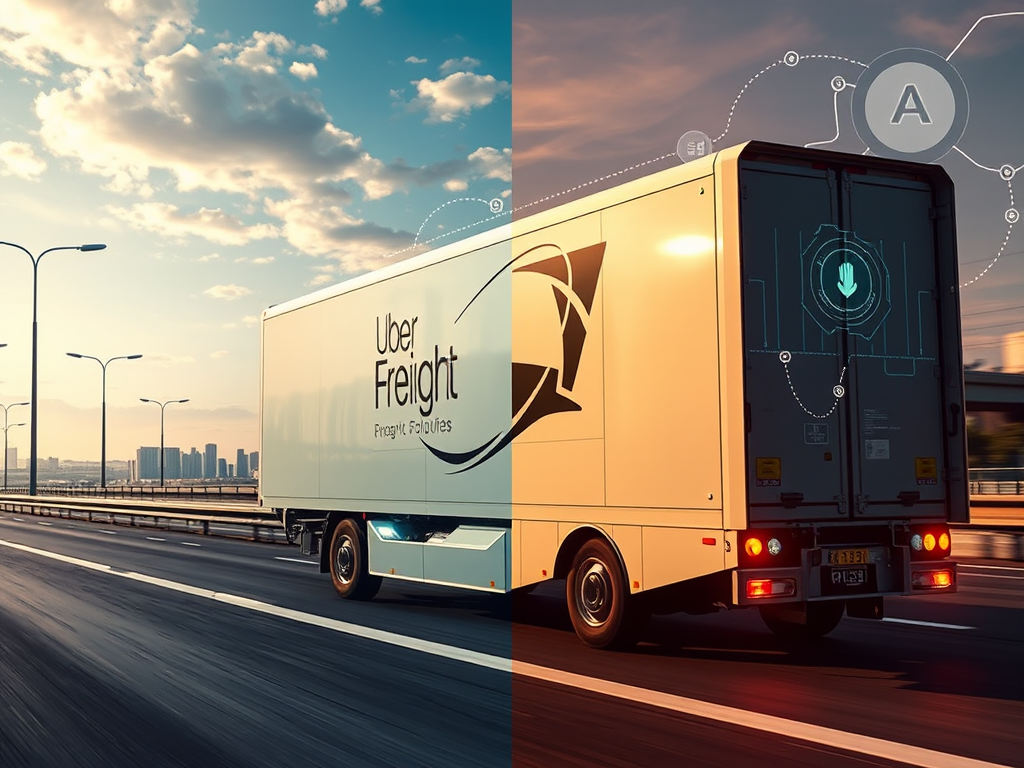
AI Reshapes Logistics: Uber Freight, Tesla Robotaxis, and Nikola’s Downfall
The transportation and logistics industry is undergoing a profound transformation driven by artificial intelligence. Recent developments from major players like Uber Freight, Tesla, and the cautionary tale of Nikola illustrate both the promise and potential pitfalls of AI-powered mobility solutions. For tech leaders and developers working at the intersection of software and transportation, understanding these shifts is crucial for strategic planning and investment.
Uber Freight’s Bold AI Strategy
Uber Freight has emerged as a frontrunner in applying artificial intelligence to solve longstanding inefficiencies in the trucking industry. The platform is leveraging machine learning algorithms to optimize route planning, load matching, and dynamic pricing in ways that weren’t possible with traditional logistics approaches.
The company’s AI systems analyze historical traffic patterns, weather conditions, and delivery timeframes to create predictive models that significantly reduce empty miles—trucks driving without cargo. This not only improves operational efficiency but also delivers environmental benefits through reduced emissions. For developers, Uber Freight’s approach demonstrates how large datasets can be harnessed to solve complex logistical problems at scale.
By automating the freight matching process, Uber has created a marketplace that adapts in real-time to supply and demand fluctuations, resulting in more competitive pricing and improved utilization of existing trucking capacity. The system continuously learns from each transaction, gradually improving its predictive capabilities and driving further efficiencies across the network.
Tesla’s Robotaxi Vision and Its Limitations
Tesla’s ambitious robotaxi program represents perhaps the most forward-thinking application of AI in transportation. The concept promises to merge autonomous driving technology with a ride-hailing service, potentially disrupting both the taxi industry and the very notion of car ownership. However, significant technological and regulatory hurdles remain.
The core challenge lies in developing AI systems capable of handling the infinite edge cases encountered in real-world driving scenarios. Despite Tesla’s impressive neural network training approach using data from its existing fleet, achieving true Level 5 autonomy remains elusive. For software developers and AI specialists, Tesla’s journey highlights the gap between theoretical machine learning capabilities and production-ready autonomous systems.
Regulatory frameworks also present substantial obstacles. Different jurisdictions maintain varying standards for autonomous vehicle testing and deployment, creating a complex patchwork of compliance requirements. Tech decision-makers must carefully navigate these constraints when planning autonomous mobility projects.
Scalable Infrastructure Requirements
Behind Tesla’s robotaxi aspirations lies a massive infrastructure challenge: building the computational systems capable of processing the enormous data volumes generated by autonomous vehicles. This includes edge computing in vehicles, cloud-based machine learning pipelines, and the network infrastructure connecting them. For startups in the mobility space, these requirements underscore the need for scalable architecture from day one.
Nikola’s Downfall: Lessons in Technology Hype
As Nikola’s electric and hydrogen trucks head to auction blocks, the company’s trajectory offers valuable lessons about technology promises versus delivery capabilities. Nikola initially generated tremendous investor enthusiasm with its vision for hydrogen-powered transportation, but struggled to transform prototypes into commercially viable products.
For tech startups, Nikola’s story emphasizes the importance of realistic technology roadmaps and transparent communication about development challenges. The transportation sector requires not just innovative software but also complex hardware integration, supply chain management, and manufacturing expertise—areas where purely software-focused teams may lack experience.
The Future of AI-Powered Logistics
Looking ahead, we can expect AI to continue reshaping logistics through increasingly sophisticated optimization algorithms, predictive maintenance systems, and eventually, fully autonomous delivery networks. Companies that successfully integrate these technologies will likely gain significant competitive advantages through cost reductions and service improvements.
For developers and tech leaders, the key takeaway is that transportation presents unique challenges for AI implementation—from managing physical assets to ensuring safety in unpredictable environments. Success requires not just technical excellence but also domain expertise and realistic expectations about deployment timelines.
As these technologies mature, the companies that maintain a balanced approach—ambitious in vision yet pragmatic in execution—will be best positioned to lead the next generation of transportation solutions powered by artificial intelligence.