Offshore web and mobile development team – iBit Progress

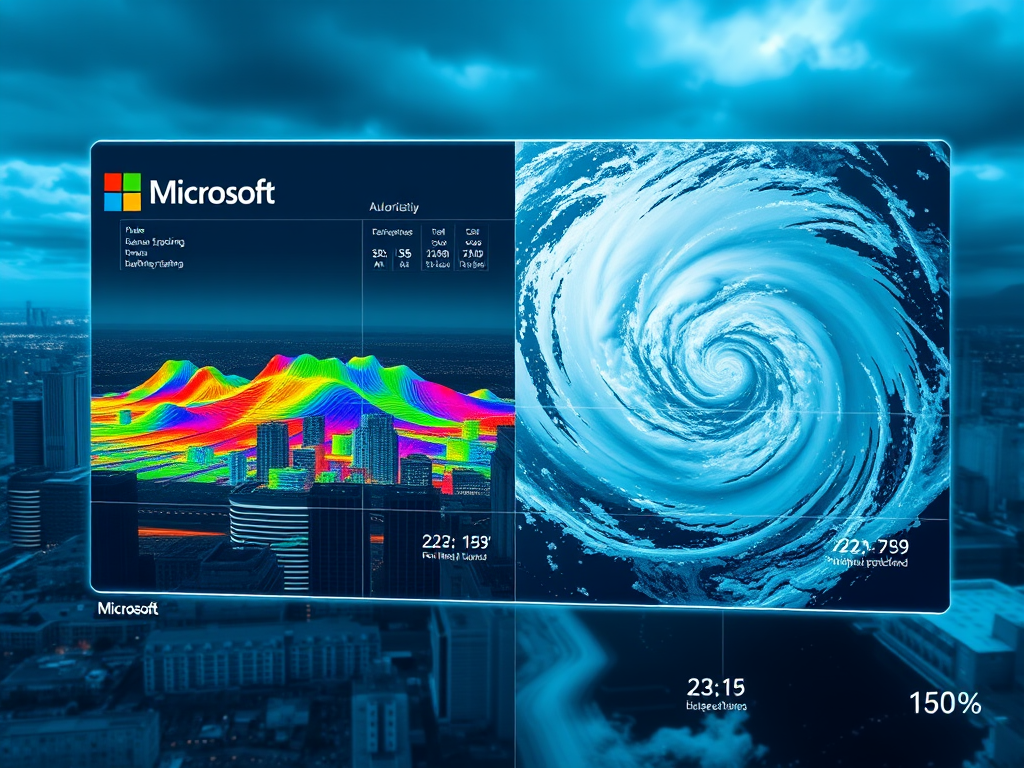
Aurora AI: Microsoft’s Breakthrough in Environmental Disaster Prediction
In a significant advancement for environmental monitoring and disaster prevention, Microsoft has unveiled Aurora AI, a sophisticated artificial intelligence system designed to predict environmental disasters with unprecedented accuracy. This new technology represents a major leap forward in how we anticipate and respond to natural phenomena ranging from air quality deterioration to severe weather events like typhoons.
How Aurora AI Works
Aurora AI leverages complex machine learning algorithms and vast datasets to create predictive models that far surpass traditional forecasting methods. The system analyzes historical weather patterns, atmospheric conditions, oceanic temperatures, and numerous other environmental variables to generate predictions with remarkable precision.
Unlike conventional forecasting tools that typically provide reliable predictions only days in advance, Aurora AI can reportedly forecast certain environmental events weeks ahead with accuracy rates exceeding 85%. This extended prediction window could revolutionize disaster preparedness efforts globally.
Key Capabilities and Applications
Air Quality Prediction
Aurora AI’s ability to predict air quality fluctuations represents a significant breakthrough for public health officials. The system can forecast pollution levels, identify potential sources, and predict how air quality will change based on weather patterns, industrial activities, and other factors. For urban centers struggling with air pollution, this tool offers unprecedented planning capabilities for implementing timely interventions.
Typhoon and Hurricane Tracking
Perhaps most impressive is Aurora AI’s typhoon prediction capability. The system can identify tropical storm formation up to three weeks before conventional detection methods, while also providing more accurate projections of storm paths, intensity development, and landfall locations. For coastal communities and emergency management agencies, this extended warning period could be life-saving.
Flood Risk Assessment
Aurora AI integrates rainfall predictions, river flow data, topographical information, and infrastructure details to generate sophisticated flood risk assessments. These models can predict not only where flooding might occur but also potential severity and duration, enabling more targeted evacuation and mitigation efforts.
Technical Infrastructure
Microsoft has built Aurora AI on its Azure cloud platform, utilizing custom-designed AI accelerators optimized for the massive computational requirements of environmental modeling. The system processes multiple petabytes of data daily, continuously refining its predictive models through reinforcement learning techniques.
Developers can access Aurora AI capabilities through a comprehensive API, allowing integration with existing environmental monitoring systems and custom applications. This accessibility ensures that the technology can be deployed across diverse use cases and geographical contexts.
Implications for Disaster Response
The potential impact of Aurora AI on disaster management cannot be overstated. By extending prediction timeframes from days to weeks, the system fundamentally changes the disaster response paradigm. Emergency management agencies gain precious time for resource allocation, evacuation planning, and public communication.
For software developers working in the disaster tech space, Aurora AI offers new possibilities for creating more sophisticated emergency management applications with enhanced predictive capabilities. For decision-makers in both public and private sectors, the technology represents a valuable tool for risk mitigation and business continuity planning.
Looking Ahead
Microsoft has indicated plans to expand Aurora AI’s capabilities to include additional environmental phenomena, including wildfire risk assessment, drought prediction, and earthquake forecasting. The company is also exploring partnerships with international relief organizations to deploy the technology in regions particularly vulnerable to climate-related disasters.
As climate change continues to increase the frequency and severity of environmental disasters worldwide, technologies like Aurora AI may prove essential in our collective adaptation efforts. By transforming how we anticipate and prepare for these events, such AI systems could significantly reduce their human and economic toll.
For tech leaders and organizations involved in environmental monitoring or disaster response, Aurora AI represents not just an impressive technological achievement but a potential paradigm shift in how humanity confronts some of its most persistent and devastating challenges.