Offshore web and mobile development team – iBit Progress

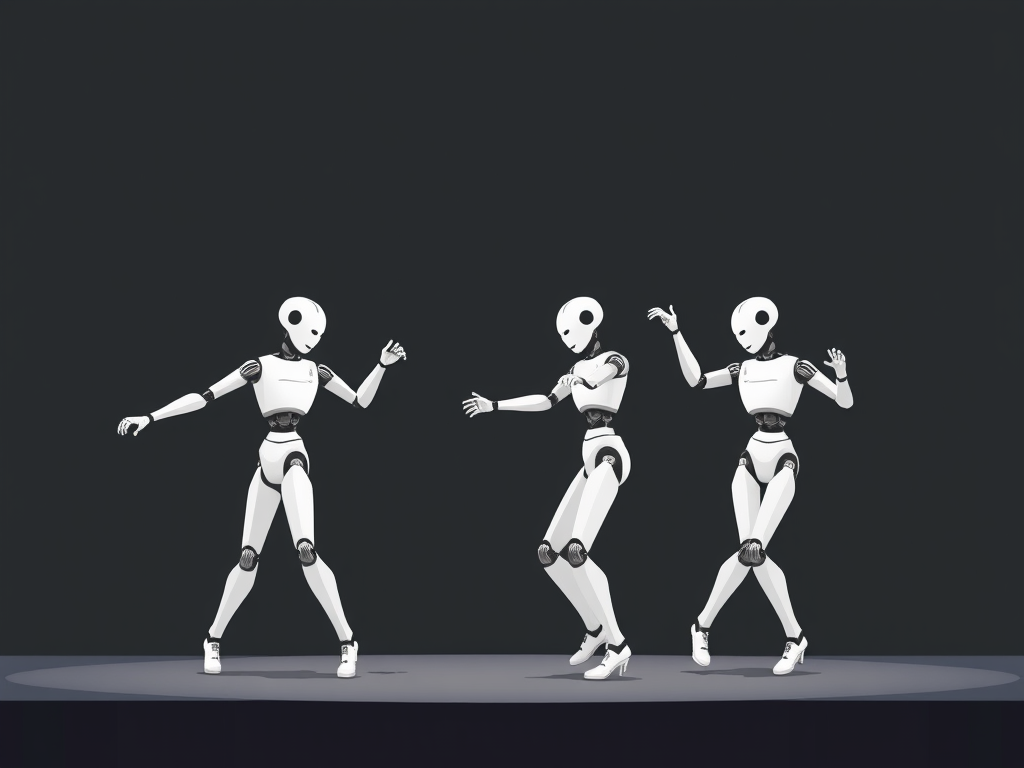
Boston Dynamics Robots Showcase AI Choreography on America’s Got Talent
In a spectacular fusion of robotics, artificial intelligence, and entertainment, Boston Dynamics made history as their cutting-edge robots took to the America’s Got Talent stage with a choreographed performance to Queen’s iconic “Don’t Stop Me Now.” This unprecedented appearance marks a significant milestone in robotics public outreach and demonstrates just how far AI-powered movement capabilities have evolved.
Breaking New Ground in Robot Performance
Boston Dynamics, long known for their viral videos featuring robots performing increasingly complex movements, elevated their public demonstrations to new heights with this prime-time television debut. The performance featured their flagship models, including Spot (the quadruped robot), Atlas (the humanoid robot), and Stretch (their warehouse robot), moving in perfect synchronization to the energetic Queen anthem.
What made this performance particularly remarkable wasn’t just the robots’ presence on a mainstream entertainment platform, but the technical sophistication behind their movements. The fluidity, timing, and expressiveness demonstrated represent significant advancements in robotic motion planning, real-time adaptability, and AI-driven choreography systems.
The Technical Achievement Behind the Performance
For software developers and robotics engineers, the performance offered a glimpse into the complex programming and algorithmic innovations powering these machines. The robots demonstrated:
- Advanced dynamic balancing systems that maintain stability during complex movements
- Real-time motion planning that adapts to musical cues
- Multi-robot coordination protocols ensuring synchronized performance
- Biomimetic movement patterns that create a surprisingly emotive quality
The choreography wasn’t simply pre-programmed sequences; it represented a sophisticated AI system that understands rhythm, spatial relationships, and performance dynamics. Each robot needed to continuously evaluate its position, momentum, and trajectory while coordinating with others—all without human intervention during the performance.
Beyond Entertainment: Practical Applications
For tech decision-makers watching, the performance highlighted how advances in robotics are increasingly relevant across industries. The same motion control systems that allowed Atlas to perform a backflip on cue enable industrial applications where precise, adaptive movement is critical. The coordination displayed between multiple robot types demonstrates interoperability capabilities essential for automated environments.
The underlying technologies powering this performance have direct applications in:
- Manufacturing automation requiring precise manipulation
- Healthcare settings where robots assist in rehabilitation
- Disaster response scenarios requiring adaptable navigation
- Logistics environments needing coordinated robotic systems
Shifting Public Perception of Robotics
Beyond the technical showcase, Boston Dynamics’ AGT appearance represents a strategic shift in how robotics companies present themselves to the public. By choosing entertainment as the medium, they’re helping to transform the narrative around advanced robotics from potentially intimidating to approachable and inspiring.
For startup professionals in the robotics and AI space, this approach offers valuable lessons in how to communicate complex technological innovations to broader audiences. The performance created an emotional connection with viewers while subtly demonstrating the remarkable capabilities of their systems.
The Future of Human-Robot Interaction
The enthusiastic audience response to the performance signals evolving public attitudes toward increasingly capable robots. As these machines become more integrated into daily life, performances like this help establish a foundation of familiarity and even delight rather than apprehension.
For developers working on human-robot interaction systems, the performance offers insights into how movement, timing, and coordinated actions can create an intuitive sense of the robots’ capabilities and intentions without requiring technical understanding from observers.
Looking Ahead
As AI choreography systems and robotic movement capabilities continue to advance, we can expect to see increasingly sophisticated performances and demonstrations that blur the line between technical showcase and artistic expression. For the robotics industry, this represents not just technical progress but evolution in how these technologies are presented and perceived.
Boston Dynamics’ AGT appearance may be remembered as a pivotal moment when advanced robotics stepped confidently into mainstream cultural awareness—not as science fiction made real, but as an emerging technology finding its place in the human experience through the universal language of music and movement.