Offshore web and mobile development team – iBit Progress

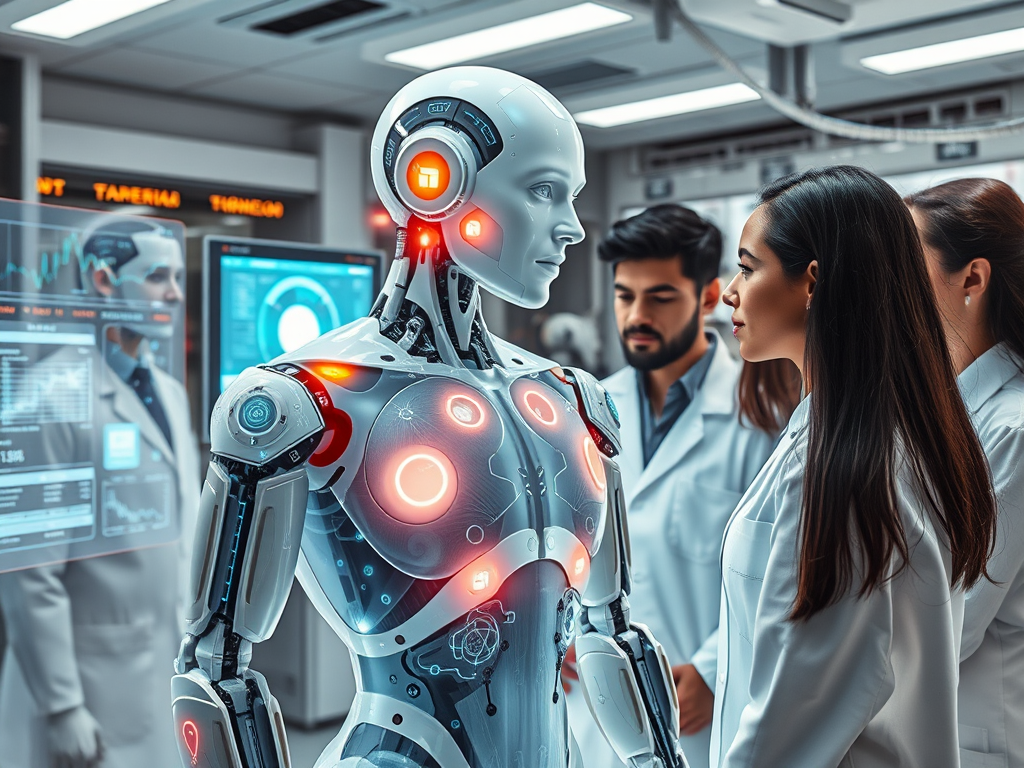
Robots with Human Physiology: Intempus’s Revolutionary Approach to AI Design
The boundary between humans and machines continues to blur as AI technology advances, but Intempus is taking this convergence to an unprecedented level. The innovative tech startup has introduced a groundbreaking approach to robotics: embedding human physiological states into their AI systems. This radical design philosophy could transform how robots interact with humans and their environment, creating more intuitive and responsive artificial intelligence.
The Physiology-AI Integration Paradigm
At the core of Intempus’s innovation is the recognition that human intelligence isn’t purely computational—it’s deeply intertwined with our physiological experiences. Our decision-making, emotional responses, and even logical reasoning are influenced by physiological states like fatigue, stress, and hunger. By integrating analogous “physiological” systems into their robots, Intempus aims to create AI that can better understand human needs and behaviors.
These robot physiological states aren’t merely simulations; they represent functional systems that influence the machine’s operational parameters. For example, an Intempus robot might have an “energy management system” that mimics human fatigue, causing it to prioritize tasks differently when its power levels decrease. This creates more dynamic, contextually appropriate responses compared to traditional AI decision trees.
Practical Applications in Software Development
For software developers, Intempus’s approach offers exciting new programming paradigms. Rather than coding explicit responses for every scenario, developers can create physiologically-influenced reaction patterns. This results in more natural interactions and reduced code complexity for handling edge cases. The framework supports both deterministic behaviors and adaptation based on the robot’s current state.
Consider debugging scenarios: when a robot encounters an error, its “stress” levels might increase, triggering more cautious operation modes or increased data logging—similar to human vigilance under challenging conditions. This self-regulating behavior could dramatically improve system stability in production environments.
The Technical Architecture Behind Physiological AI
Intempus’s system architecture employs a multilayered approach where traditional computational processes interact with a “physiological engine.” This engine maintains variables representing states like energy levels, processing load “stress,” and priority thresholds that fluctuate based on external inputs and internal conditions.
The architecture includes feedback loops between the physiological state and decision-making modules, creating a dynamic system where responses evolve based on experience and current conditions. Neural networks trained on human physiological responses help calibrate these systems, ensuring robot reactions align with human expectations.
Business Implications for Tech Leaders
For CIOs and technology decision-makers, Intempus’s innovation offers potential solutions to persistent challenges in human-machine collaboration. Robots with physiological awareness could better integrate into human workflows, understanding when to interrupt humans and when to operate autonomously. This contextual awareness reduces friction in mixed human-robot environments and potentially increases productivity.
The approach also addresses a key barrier to robotics adoption: the uncanny interaction experience with traditional robots. By mimicking human physiological patterns, these systems become more predictable and comfortable for human coworkers, potentially accelerating implementation timelines and reducing training requirements.
Ethical Considerations and Future Directions
While promising, this technology raises important questions about the boundaries between artificial and human intelligence. As robots develop more human-like characteristics, our relationship with them inevitably transforms. Intempus emphasizes that their goal isn’t to create robots that feel emotions but rather machines that can better understand and anticipate human needs through physiologically-inspired design.
The approach opens potential pathways to more sophisticated AI systems that could eventually develop emergent behaviors resembling intuition or instinct—capabilities that have proven difficult to engineer through traditional programming methods.
Conclusion: A New Chapter in Human-Machine Collaboration
Intempus’s physiological approach to robotics represents a significant shift in AI design philosophy. By drawing inspiration from human biological systems rather than just cognitive processes, they’re creating machines that interact more naturally with humans and their environments. For developers, business leaders, and technology innovators, this approach offers promising new avenues for creating more intuitive, responsive, and ultimately useful artificial intelligence systems.
As we continue to integrate robots into our work and lives, approaches like Intempus’s may prove essential in creating technology that truly understands and complements human needs rather than simply executing commands. The future of AI might not just be smarter machines, but machines that operate with something resembling a human sensibility—making them better partners in our increasingly automated world.